Tag: London

German Pork Butchers in Britain


Before burgers, fish and chips and kebabs came the original takeaway: German pork pies, sausages, rissoles and other ready-made foodstuffs. During the 19th century, while most European emigrants were making their way to North America, a significant number of Germans were quietly making England their new home

Pork packing in Cincinnati. Print showing four...
Pork packing in Cincinnati. Print showing four scenes in a packing house: “Killing, Cutting, Rendering, [and] Salting.” Chromo-lithograph of the cartoons exhibited by the Cincinnati Pork Packers’ Association, at the International Exposition, at Vienna.. (Photo credit: Wikipedia)
In the Hohenloheregion in the north-east of Germany, population growth, agricultural depression and a series of crop failures provided a significant push-factor. Germans from the region began looking outward for new opportunity, with a number of skilled professional butchers making their way to England in 1817.

The butchers quickly established themselves and found a ready market in the rapidly-expanding cities of Northern England. Industrialization was leading to a burgeoning population who demanded cheap, ready-made basic foods. The butchers had arrived at an opportune moment to serve a market of factory workers who wanted a convenient, hot meal after finishing work.

The demand quickly outstripped the supply, leading more butchers to open shops across England. In Sheffield, for example, one lone butcher shop in 1817 grew to 14 shops by 1883, and 18 shops by 1914. Soon, the number of qualified Hohenlohe butchers could no longer meet the demand, so they called out to young men back home.

Young farmers’ sons were ready and able to take up the challenge. Once the winter set in, they jumped into butchery courses where they learned the art of slaughtering and butchering. Back home, their mothers taught them to produce the savory German sausages and salted, smoked and pickled meats that were in such high demand in England. With well-honed skills, the young butchers entered the British market near the middle of the 19th century.

As butchers grew wealthy, some sent letters home recruiting young women for household help. Others wrote home looking for wives. German women answered the call, bringing with them a whole set of skills and delightful family recipes to add to the butchers’ offerings.

Butchers
Butchers (Photo credit: Wikipedia)

The German butchers and their families quickly spread to all parts of Northern England, eventually establishing themselves as far afield as Scotland and Ireland. Butcher shops were soon opened in London as well as the German community continued to spread and grow.

The demand for cheap, ready-made foods continued to grow, and in the 1870s, the immigrant butchers called for a third wave of emigrants. A whole new flock of young apprentice butchers and young girls finished school and set off for work in Britain. The boys immediately jumped into their new employment, and girls served in German households.

A 1897 newspaper ran a story documenting the phenomenon, noting “The Germans created this business amongst us … In every town there are many of them, and there is now hardly a village (…) throughout the North of England that has not one or more. Englishmen have all along been to blame for neglecting the pig as a subject of human food (….). But the German is the pork man par excellence”

At first, the Germans stayed in close, tightly-knit communities. They spoke little English, and maintained their traditions, customs and stories. Eventually, however, they realized that their enterprise would be better served by integration into British society. This allowed them to thrive even further, with some taking leading positions in pork butchers’ associations.

Unfortunately, the two World Wars brought widespread intolerance toward the German butchers. The once-thriving business went into decline, and the rich history of the Hohenlohe butchers was greatly diminished. A few establishments did make it through, like the Herterichs in Ireland and the Haffners in Burnley; however, little remains today of the once-famous German takeaway specialties.

Sources

1. New light on the German Pork Butchers in Britain (1850 – 1950)” by Karl-Heinz Wuestner, Ilshofen, Germany http://www.surrey.ac.uk/cronem/files/conf2009papers/Wuestner.pdf

All roads lead to London

Every English child can recite the story of Dick Whittington, the poor country boy who finds fame and fortune – and eventually becomes Lord Mayor of London thanks to the ratting skills of his cat.  Richard Whittington was the real-life inspiration behind the story, and while he wasn’t a poor orphan, he was a younger son with no inheritance. He set off for London, intent on making his fortune as a mercer, and ended up making his name as a successful trader. In the end, he did indeed become Lord Mayor of London and eventually a Member of Parliament.

Portraits of Sir Richard Whittington, & his Ca...
Portraits of Sir Richard Whittington, & his Cat from an original painting at Mercers Hall. 19th Century engraving printed for Alex Hogg and Co, London. (Photo credit: Wikipedia)

Whether you’ve heard the historical account or the whimsical rendition, the story of Dick Whittington exemplifies the aims of so many who come to the big city seeking their fortunes. As many capital cities do, London acts as something of a magnet for the general population. The allure of the big city, the greater potential for employment and the promise of opportunity continues to draw people in, just as they once did for young Dick Whittington.

An ever-growing population

Today, London is growing more rapidly than ever. In fact, in eight short years (from 2001-2009), the population of London expanded by more than 430,000, bringing the population count over 7.75 million. London is the UK’s single most populated region, with an average of 4,900 people per square kilometer. To break that down a little further, the city of London makes up just 0.6 percent of the UK’s land area, yet it hosts approximately 12.5 percent of the UK population.

Certainly, some of the population growth could be attributed to births; however, upon further inspection, this hardly explains the massive population growth. Upon examination of the bills of mortality, historically London’s death rate has always outweighed the rate of births in the city. Thus, we can assume that the majority of London’s growth is due to migration.

The impact on London’s economy

Whether they come from abroad, smaller towns within the UK or migration from the countryside, those who migrate to London find work across a broad spectrum of industries. They can be found in upper echelons of financial and business services, as well as in humble construction jobs; however, today many of those surveyed seem to drift toward the catering and hospitality business.

Wherever they find work, migrants produce two specific positive effects on London’s economy. The first is a qualitative effect, as migrants bring new flexibility, diversity, and skill sets to the work environment. The second is a quantitative contribution to the job market, as the high numbers of labourers reduce upward wage pressure.

Unfortunately, many migrants are concentrated in the low-earning segment. While jobs are abundant, labourers are also abundant, placing a steady downward pressure on wages in an already low-paid sector. In spite of this, there has been no significant increase in unemployment rates as of yet.

[social-chatpop]

Accommodation of migrants

As the population increases, accommodation becomes a serious concern. Some come into the city with the resources to buy housing; however, the high demand has put pressure on steadily-increasing housing prices. Fortunately, rents have remained somewhat stable in spite of increased demand.

Some migrants do come into the city with extremely limited resources, and are unable to find adequate accommodation. Most are not immediately eligible for social housing, making life particularly hard for migrant families. Eventually some become eligible for social assistance if their income remains low and their housing is below standard. Others, however, often face homelessness before receiving assistance.

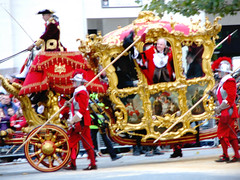
Lord Mayors State Coach 1
Lord Mayors State Coach 1 (Photo credit: Gauis Caecilius)

The “most culturally diverse city in the world”

Migration can be an uncomfortable and politically-charged topic to discuss; however, many see the ongoing influx to be a good sign of the city’s modernity and adaptability. In spite of the various struggles that inevitably arise from ongoing migration – namely, poverty and low wages – London has remained socially cohesive and continues to look at in-migration as a positive thing.

The Mayor’s London Plan proclaims proudly that London is “the most culturally diverse city in the world,” noting that “London’s diversity is one of its great historical social, economic and cultural strengths.” With this perspective and an ongoing effort to assist new arrivals, migration should continue to have a positive impact on London.

Britain’s Child Migrants

Toward the end of the 19th century, Britain was facing significant social and economic trouble. Deprivation, homelessness and neglect were endemic throughout Britain’s overcrowded cities, and child migration emerged as a solution.

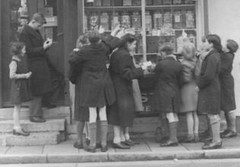
1950 Child Migrants
1950 Child Migrants (Photo credit: theirhistory)

Britain was in the midst of empire building and the colonies not only provided enormous wealth and resources – they also provided alternative homelands for the unwanted peoples of Britain. Many Britons emigrated throughout this period of history; yet few know of the many thousands of children who were rounded up and sent abroad. Child migrants became the brick and mortar force on which the Empire could continue to expand.

Children as young as three were routinely shipped abroad – primarily to Australia and Canada – through government-sanctioned child migration schemes. Charities were even established to support the emigration efforts, as children were gathered from across the UK. They were brought to major British ports such as London, Glasgow, Liverpool, and Southampton where they were given a trunk of clothing and shipped off to their new homes. The vast majority never returned to their homeland.

Approximately 100,000 children were sent to Canada, over 7,000 to Australia, and several hundred were shipped to New Zealand and Southern Rhodesia. Prior to 1900, the majority of the children were collected from workhouses, city streets and declining rural areas where they were often found destitute and homeless. After the turn of the century the children were sent from orphanages and children’s homes. In some cases, parents were unable to provide for their children and chose to send them abroad with the migration schemes.

Australian Child Migrants leaving Alverstoke 1950
Australian Child Migrants leaving Alverstoke 1950 (Photo credit: theirhistory)

Many of the children hardly knew what to expect. They faced the future with fear, but also with excitement as in many cases they were simply leaving behind a life of neglect, hunger and hardship. They were promised new sights, new places and the excitement of exploration. They were treated to tea parties and visited by popular entertainers, powerful benefactors, and even by royalty. Each departure was highly publicized to promote the work of the various charities.

The children were actually treated very well in Britain and all throughout the voyages. They enjoyed the luxury of passenger liners, sleeping in comfortable cabins, eating hearty meals, and even enjoying games, swimming and schooling on board the ships.

Unfortunately, upon arrival in their new homes the children were faced with lands completely foreign and often harsh. In Canada, the children were distributed to rural homes where they lived and worked with farming families. Some fared better than others; however the majority faced hard physical labour in a harsh climate, compounded by the loneliness of being with a family but not being considered part of the family.

In Australia the children fared no better. Their smart wardrobes were stripped from them and exchanged for khaki work clothes and bare feet. The children were placed in religious institutions or farming schools where they were subjected to harsh discipline and backbreaking labour. The children were expected to continue in agriculture, and thus received little to no education.

At the height of the child migration scheme, as many as 300 children would travel aboard a single ship, chaperoned by staff from their designated charity. The numbers dropped lower and lower as the 20th century progressed; however, the schemes weren’t officially ended until 1967.

When the Child Welfare Act was passed in 1948, the child migration schemes came under scrutiny. Investigations were carried out and several of the participating institutions received strong condemnation. The schemes continued, however, for another decade. The last group of child migrants was sent to Australia by air in 1967, and the institutions began to close in the 1970s.

Single to Wisconsin, Please!

Kingston upon Hull sits quietly at the junction of the Rivers Hull and Humber. Due to its ideal location, the port has long enjoyed a successful and lively trade with most of Northern Europe. Shipping lines not only brought significant financial revenue to the town, but also added greatly to the culture and community as migrants made their way through the port.

English: "Farewell to home." Emigran...

Prior to 1836, however, migrants flowed in at a mere trickle. Those who passed through were primarily there for commercial reasons. Some migrant ships did pass through Hull on their way to Canada or the US, though these were infrequent and the numbers negligible. The few ships that did accommodate migrants were unpleasant and the journey was a tiresome ordeal. Accommodations were cramped and voyage timings were irregular.

All of this changed in the 1840s as steamship companies in Hull, Leith, Hamburg and Gothenburg began offering regular emigrant services via the UK. The steamships dramatically shortened the time it took to travel between mainland Europe and the UK ports, and thanks to contracts with the Royal Mail postal service, steamship companies were able to offer trips all throughout the year (rather than being limited to the previously established “immigrant season”).

The Wilson Line of Hull began running steamship services from Norway and Sweden as early as 1843. The North Europe Steam Navigation Company followed in 1853, running a strong fleet of nine steamers back and forth on the Christiania and Gothenburg route. By 1858, however, the Wilson Line practically monopolized the route from Scandinavia to Hull, and brought the majority of emigrant traffic.

From the port cities, the transmigrants were taken by train to Southampton, Liverpool, Glasgow, or London. In these larger cities, the migrants boarded large transatlantic liners for the final leg of their journey to the United States. Passengers could purchase a complete travel package that covered the entire trip including the steamship to Hull, the train ticket on the Transpennine Railway Line to Liverpool, and the final ocean liner ticket that would take them to their final destination.

This brought on a boom of transmigration as folks travelled en masse from Sweden and other Northern European countries. Of course, the city of Hull was not initially prepared for such an enormous number of emigrants, thus emigrant houses and railway stations quickly became overcrowded and a serious health risk. After a cholera outbreak in 1866, the city put major preventative measures in place. Travellers were no longer allowed to roam the city on foot, but were required to remain on board the steamers until their trains were ready to depart.

In 1871, the Northeastern Railway Company built a waiting room near Paragon Railway station so that the emigrants could relax, meet ticket agents, use the washrooms and facilities and be sheltered from the wind and weather. Eventually, the majority of the emigrants were passing through the Paragon Railway Station. Though the travellers were only there for a short time, their numbers were so great that in 1881, the station doubled the size of its waiting room. Women and children were able to wait in a separate room, and sanitary facilities were expanded and improved to meet the greater demand.

At times, so many emigrants were arriving that up to 17 carriages would be hooked up to a single steam engine. Passengers would cram into the forward carriages, while their baggage was piled high in the rear four cabs. Trains pulled out of Hull every Monday morning to make the three to four hour trip to Liverpool.

By 1914, however, transmigration had slowed to a crawl once more. The UK’s Alien Immigration Act of 1905 had severely restricted travel, and when WWI broke out followed by the passing of immigration acts in America, mass transmigration came to an end. Over those 70-odd years, however, 5 million transmigrants flowed through the UK, with approximately 60% of them passing through the port in Hull.

Related Items

Finding your Swedish Roots

The Emigration from Sweden

Swedish Americans

Sources

1. The research of Dr Nicholas J. Evans at the University of Hull. For further information please access the following article he has written Indirect Passage from Europe. European Transmigration via the UK, 1836-1914,  Journal for Maritime Research, Volume 3, No 1 (2001), pp. 70-84


The Silk Weavers of Spitalfields

London played host to a substantial number of French Protestants throughout the sixteenth century. France – a staunchly Catholic country – heavily stigmatized Protestantism, making the country somewhat uncomfortable for deviants from the Catholic Church. It wasn’t until the 1680’s however, that the Huguenot migration began en masse.

Christ Church Spitalfields. Photograph taken b...
Christ Church Spitalfields. Category:Images of London (Photo credit: Wikipedia)

For many years, the Edict of Nantes had granted the Protestants the freedom to worship as they chose in designated areas, providing a measure of safety. This marginal security came to an end with the Dragonnades, a policy introduced in 1681 by Louis XIV. Dragonnades were coercive tactics intended to make France increasingly uncomfortable for the Huguenots by forcing them to re-convert to Catholicism. Finally, in 1685, King Louis overturned the Edict of Nantes, resulting in heavy-handed laws and severe persecution of the Protestants.

Hundreds of thousands of Protestants were forced to flee the oppressive rule in France. Many found new homes in the Netherlands, others in America, and others still finding refuge near the Cape of Good Hope.

In keeping with the strong British anti-Catholic sentiment of the day, King Charles II flung open the doors of England, offering a place of refuge to the fleeing Huguenots. Thanks to widespread propaganda depicting the persecution inflicted on French Protestants, the refugees arrived to a warm welcome by the English people. In fact, they were the recipients of generous charitable support from the British monarchy throughout the end of the seventeenth century.

By 1710, between 40,000 and 50,000 refugees had made their way to the safety of England. Historians estimate that around half of that number settled in Spitalfields where housing was cheap and the London trade guilds held less economic power.

The Huguenots came from all walks of life, though many were intellectuals and highly skilled tradesmen with backgrounds in weaving, clock making, and financial services. Textile manufacturing, in fact, was the prevalent occupation amongst the refugees, and they found their services in high demand among the British upper class.

Thanks to the hard work and skill of the Huguenot weavers, the textile trade thrived, and Spitalfields soon became known as “Weaver Town.” The influx of silk and French styles had quite an impact on the fashions of the British upper class. Many workshops were opened, and their owners soon became extremely wealthy with many hundreds of employees. The wealthy Huguenots built large, distinctive houses in Spitalfields – many of which still remain today.

The Huguenot Churches were a binding quality in the community, providing both a connecting point for the immigrants, as well as a support system for the poor and new arrivals. Two churches in particular became very well-established. A very strict, Calvinist church thrived on Threadneedle Street in the City, while a more Anglicized worship took place at the Savoy in the West End. These two churches became focal points for the many refugees, and led to the development of two distinct communities.

Due to the high concentration of French immigrants, they managed to retain much of their distinct culture and language for several generations. Their high fashion and language set them apart somewhat from the general population, and over time they achieved a level of respectability – particularly in contrast to the squalor and immorality of many Londoners.

In time, however, the Huguenots gradually assimilated into British culture and society. The strict Calvinist Protestantism drifted gradually toward a more Anglicized form of worship, and the Huguenots eventually took on Anglicized surnames (though this was often due to English clerical error in record-keeping).

As Indian and Chinese silks became more readily available, the Spitalfields silk weaving went into decline. This seriously affected the community in Spitalfields, and though the industry struggled on, the 30,000 workers were reduced to starvation wages. The ebbing prosperity, along with the introduction of new machinery, led to violent clashes between factory owners and their workers.

By 1801, the “Spitalfields Acts” were passed in an attempt to improve wages and working conditions, and to protect the domestic market. Eventually, however, many Huguenots moved away from Spitalfields, settling in the suburbs.

The Huguenot impact on Spitalfields remains today though, with many French-sounding street names, and many well-preserved Huguenot houses. In fact, it is estimated that Huguenot blood still runs through a quarter of London’s population.

Navigation

Copy Protected by Chetan's WP-Copyprotect.